Why ‘Best Beach’ Lists Don’t Help When You Care About Water Clarity
You’ve probably already opened a few “Best Beaches in Zakynthos” lists and noticed they all recommend the same ten places. They rave about “amazing views” and “must‑see spots,” then drop a quick line about the water being beautiful. Helpful for photos, less helpful if you actually care what you’ll be swimming in.
Most lists mix everything together: shallow family beaches, party spots, pebble coves, and windy stretches where the sea turns murky by midday. They rarely say when the water is clearest, whether boats stir up sand, or if the bay traps seaweed.
If you want truly transparent water, you need more precision than that.
Getting Specific: What ‘Crystal-Clear’ Actually Looks Like on Zakynthos
On Zakynthos, that precision starts with how the water actually looks and behaves when you’re standing in it. In the clearest spots, you can see the lines on your toes in chest‑deep water, and the seabed—rock, pebble, or sand—looks almost sharper through the surface than out of it. Colors matter too: pale turquoise over white sand usually means shallow and very clear; deep electric blue against cliffs often means depth, not cloudiness.
Conditions play a big role. Pebble coves and rocky inlets stay transparent longer because there’s less loose sand to kick up. Wide sandy bays can look unreal at 9 a.m., then turn milky once wind, waves, and boat traffic start stirring the bottom. After a windy night, even a famous beach can look dull the next morning.
Once you know what “clear” really looks like, you can match it to how you actually like to spend a beach day.
Choosing Your Style of Clear-Water Day: Quiet Coves, Iconic Bays, or Boat-Only Spots?
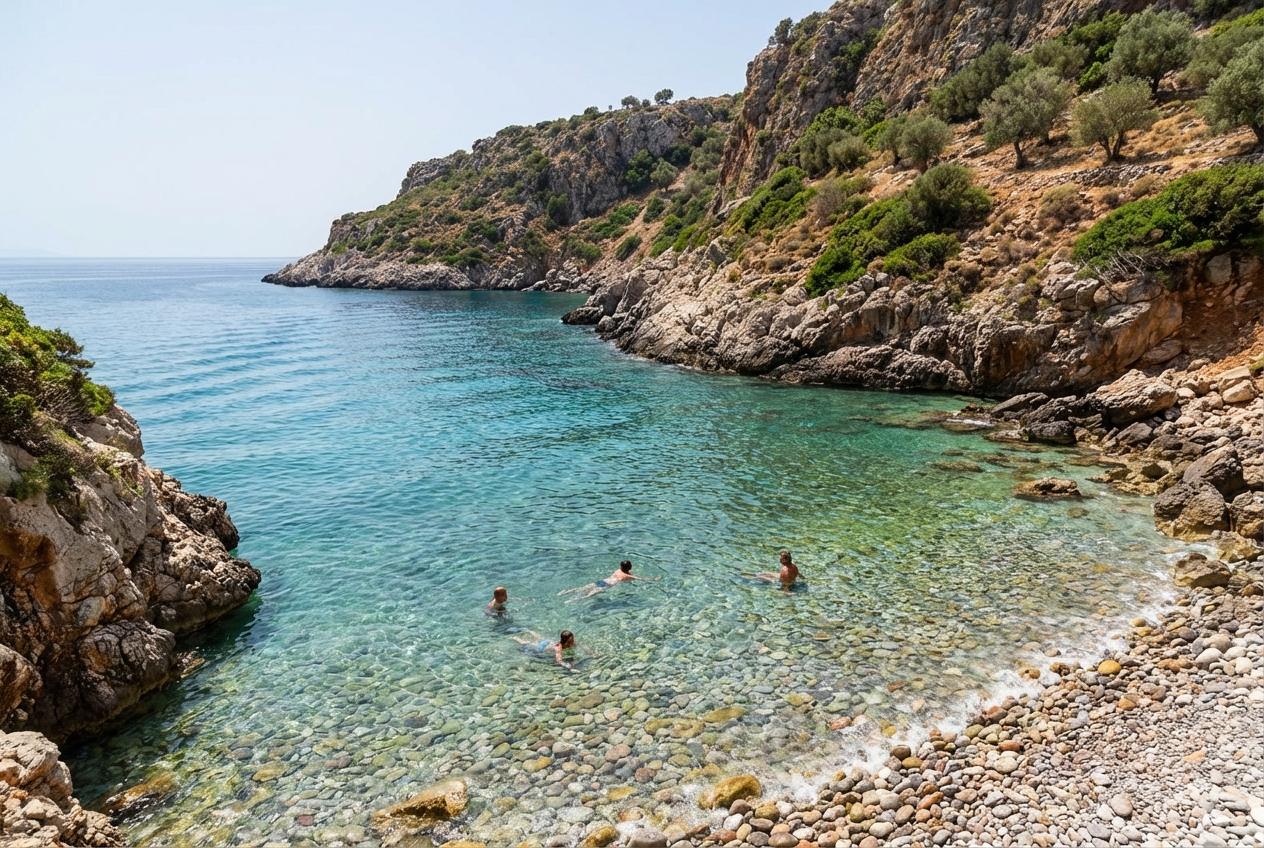
Once you start matching that picture of clear water to your own habits, the island splits into three basic types of days. Some people want to float in silence, hear stones clicking under their feet, and maybe share the cove with a few other swimmers. Others want the “this is the one from the photos” moment, even if it means more people around. Then there are those who are happy to spend more time on a boat than on a towel, as long as the water is as clean as it looks in the brochure.
Quiet coves usually mean pebbles, steeper entries, and basic facilities or none at all. You trade sunbeds and beach clubs for space, cleaner water, and less sand in the shallows. Iconic bays flip that: easier access, more services, but also more feet and boats clouding the edges by lunchtime.
Boat-only spots sit in the middle. You escape the crowds on land but accept a fixed schedule, brief swimming stops, and less control over exactly where you get in the water. Deciding which of these feels “worth it” to you makes the difference between a day that looks good in photos and a day that actually feels right, and it also narrows down which specific beaches deserve a place on your shortlist.
Where the Water Really Shines: A Shortlist of Zakynthos Beaches by Experience
Once you know whether you’re a quiet‑cove, iconic‑bay, or boat‑stop person, a few places consistently stand out for genuinely clear water. For low‑key swimming, Porto Limnionas and Porto Roxa on the west coast are hard to beat: rocky entries, ladder access in spots, and deep, glassy water that stays transparent even when the island gets busy. Makris Gialos, on the northeast, adds pebbles and a bit more space to spread out.
If you want the postcard moment, Navagio (Shipwreck Beach) is still the showpiece for sheer color, but the sand is often churned up by constant boat landings. Many people now treat it as a viewpoint stop and swim elsewhere. For a more relaxed “classic beach” feel with clear shallows, look at Gerakas or Dafni on the Vasilikos peninsula, especially early in the day.
For boat‑focused days, the Blue Caves, Mizithres, and the coves around Marathonisi and Keri Caves usually deliver startlingly clear, deep water, but you only get short, timed swims. These spots, along with the coves and bays above, form a realistic shortlist; the next step is understanding the trade‑offs in getting to them, when to go, and how busy they actually feel on the ground.
Facing the Trade-Offs: Access, Crowds, and Timing at These Beaches
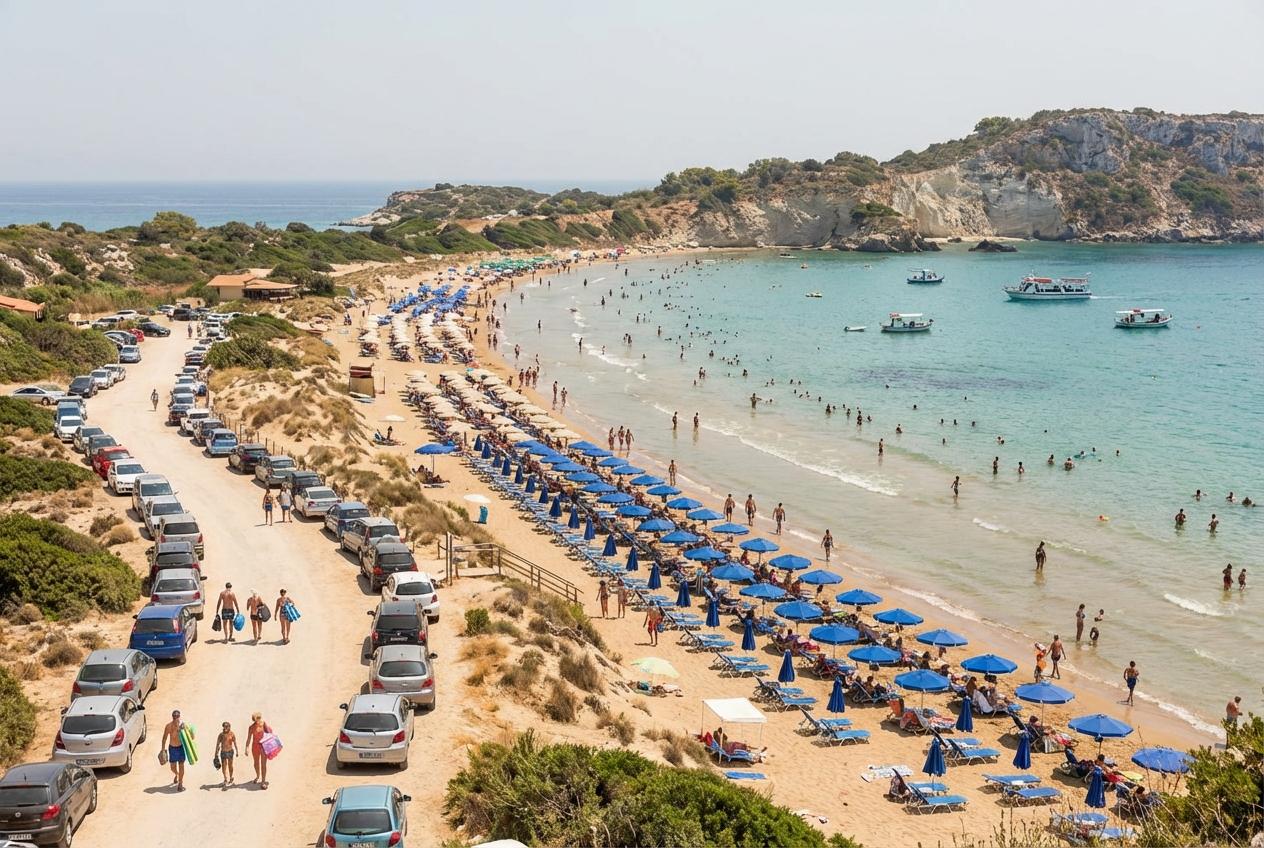
Those trade‑offs show up quickly when you look at how you’ll actually reach each place. Porto Limnionas and Porto Roxa involve narrow roads, uneven parking, and rock or ladder entries that don’t suit every body or every mood. They’re fantastic if you travel light and love jumping straight into deep water; less so if you’re carrying beach gear or coming with small kids.
On the east and south, access softens but crowds grow. Makris Gialos sits right off the main coastal road, so late morning sees more cars and more boats hugging the shore. Gerakas and Dafni are easier underfoot, but sunbeds fill fast, and on calm days the shallows get cloudy as more people wade in and out.
Timing is the lever you control. Early starts, late‑afternoon swims, and grouping nearby stops into one outing can preserve both water clarity and your patience, and that’s where a simple plan helps.
Turning the Shortlist into a Simple Beach Plan for Your Trip
A simple way to use all this is to think in “anchor days” instead of trying to hop everywhere. Pick one main clear‑water target per day, then add one light extra stop nearby if you still have energy.
One template looks like this: early‑morning swim at Gerakas or Dafni, long break for lunch and shade, then a short sunset stop at Porto Zorro or another nearby beach you don’t mind skipping if you’re tired. Another: commit a full afternoon to Porto Limnionas or Porto Roxa, accept the drive and the ladders, and don’t overload the day with extra plans.
Boat days sit in their own box. Treat a Blue Caves or Keri Caves trip as the clear‑water focus, then pair it with an easy roadside swim like Makris Gialos rather than another “destination” beach. The point is to leave space, so you choose what to repeat rather than rush through and wonder what you missed.
Leaving Zakynthos Without Regrets About the Beaches You Skipped
That’s the real difference between leaving with a few favorites you chose twice and a long list of “maybe next time.” You will skip good beaches. That’s fine. The trick is to skip them on purpose, not because you spent your clearest mornings in traffic or chasing one more “must‑see.”
A useful rule of thumb: once you’ve found one place where the water feels exactly how you hoped, it earns the right to be repeated. Let the rest be backup options, not obligations. You’ll fly home remembering how it felt to swim, not how many pins you ticked off a map.