You don’t need a workout plan to feel better in your body
You can do everything “right” for your job and still feel off by midafternoon: tight neck, heavy legs, foggy head, and a back that complains when you stand up. Most people assume the fix has to look like a workout, with gear, sweat, and a calendar.
But a lot of what you’re chasing is basic body upkeep. A few minutes of easy movement can nudge circulation, warm joints, open breathing, and help digestion—often fast enough to notice the same day. It won’t feel heroic, and it won’t “count” as exercise in the usual way.
That’s where the real question starts: when you feel stiff and slow, is it really just aging?
That stiff neck and foggy afternoon: is it really “just aging”?
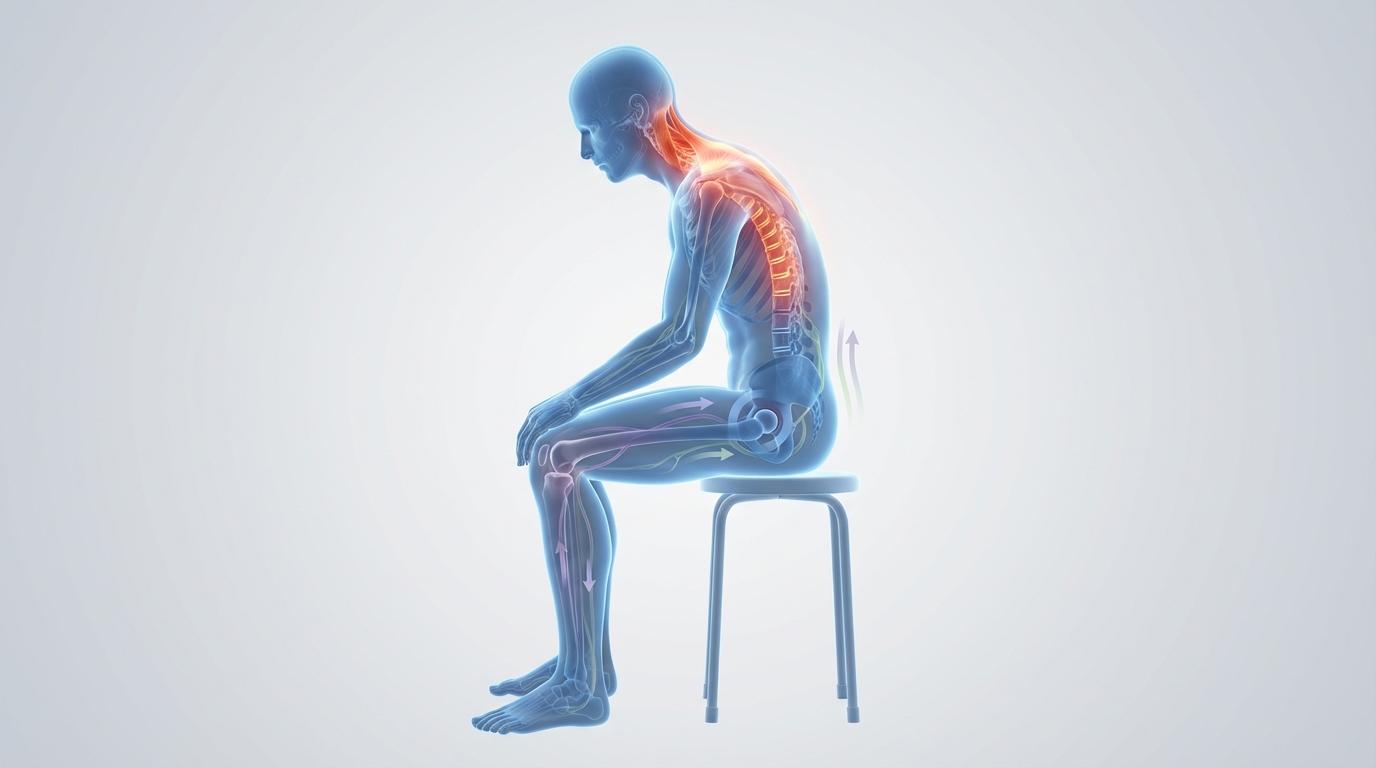
On a long workday, it’s easy to label the symptoms—tight traps, low-grade headache, stiff hips, afternoon brain fog—and file them under “getting older.” That story fits because it’s simple, and because the changes feel gradual.
But a lot of that “age” feeling is really position plus time. If you sit for hours, your upper back stays rounded, your neck muscles work overtime to hold your head up, and your hips stop moving through their full range. Blood and fluid don’t circulate as well, joints feel dry, and your breathing tends to get shallow. Then your brain gets less of the steady input it likes: pressure shifts, deeper breaths, and small posture changes.
Aging is real. It can hide what’s reversible. The fastest way to tell is to change inputs briefly and see what updates.
What if movement is more like restarting your systems than “working out”?
“Change inputs briefly and see what updates” is exactly how to think about movement on a workday. You’re not trying to “get fit” in that moment. You’re trying to restart a few systems that drift when your body holds one position for too long.
Stand up and take a short walk, and blood flow picks up in your legs and trunk. Your joints get fresh fluid moving through them, which often takes the edge off that dry, creaky feeling. A couple deeper breaths usually follow without effort because your ribs and diaphragm can move again, and that can shift your stress response down a notch.
The trade-off is that the effect fades if you go right back to stillness for hours. That’s why small movement done repeatedly tends to beat one big “fix” you can’t maintain.
Try this quick check: what changes after two minutes of standing and walking?
Small movement done repeatedly beats one big fix, but it helps to feel the change in your own body. Try a quick check the next time you notice stiffness or fog: stand up, set a two-minute timer, and walk at an easy pace. No stretching routine, no power walk. Just move.
Before you start, notice three things: how your neck feels, how full your breath is, and how alert you feel. After two minutes, check again. Many people feel their feet warm up, their low back loosen slightly, and their breathing get deeper without trying. If you’ve been clenching your jaw or lifting your shoulders, that often drops a notch once your rib cage starts moving again.
If nothing changes, that’s useful too. It usually means you need either a longer reset (five minutes) or a different input (stairs, a few gentle bends, or a slower walk with bigger arm swing). Either way, you’re collecting data you can repeat.
Why your hips and back feel ‘rusty’—and why variety matters more than one big stretch
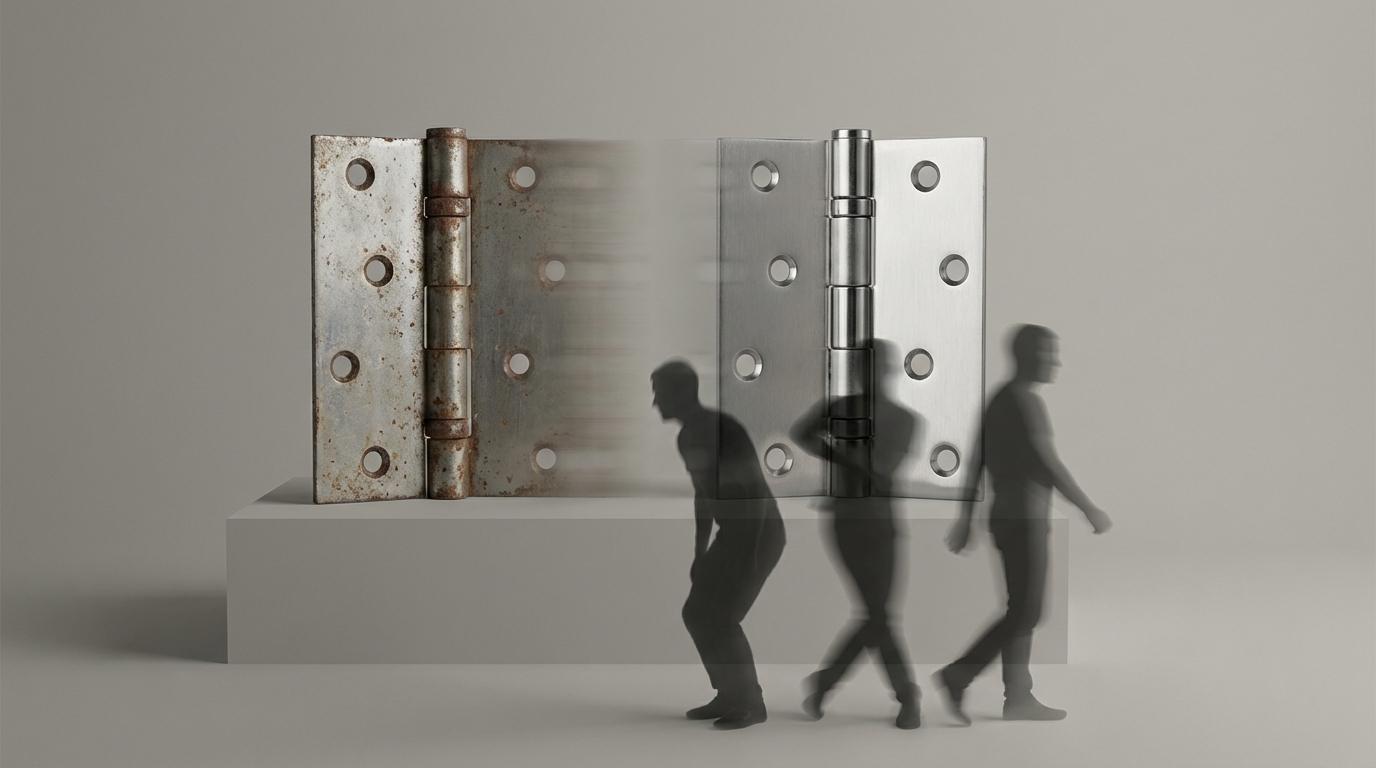
When a two-minute walk helps, the next thing many people do is try to “fix” the leftover stiffness with one long stretch—usually for the hips or low back. It can feel good in the moment. Then you sit again, and the same rusty feeling shows up when you stand.
A big reason is that your hips and spine are built for lots of small changes: bending, turning, stepping, and shifting weight. When you hold one position for hours, the tissues around those joints stop getting regular signals to move, and joint fluid doesn’t circulate as well. The result often feels like a hinge that hasn’t been used, not a body that’s “tight” in one simple spot.
Variety usually beats intensity. Two or three different inputs—ten bodyweight squats to a chair, a gentle hip hinge, a short set of stairs—often loosens your back more than pushing one stretch harder. You have to experiment, because the “right” mix can change day to day.
When you’re stressed, your breathing gets smaller—then everything feels harder
That day-to-day experimentation gets harder on the days you’re stressed, because your breathing often shrinks without you noticing. You sit a little more still, your shoulders creep up, and each breath stays higher in your chest. Then even simple movement can feel oddly effortful, like your body is already “busy” before you start.
Smaller breathing changes a lot of inputs at once. Your ribs and upper back move less, which can make your neck and mid-back feel tighter. You take in less air per breath, so you may yawn, sigh, or feel restless even if you’re not doing much. Digestion can also feel slower when you stay braced through your belly all afternoon.
You might interpret that as “I’m out of shape,” and skip the reset. A better test is to stand, loosen your jaw, and take five slower breaths while you walk for one minute—then decide what’s next.
Choose three “movement anchors” that fit your real day (energy, digestion, sleep)
Once you’ve felt that one-minute reset, the hard part is remembering to do it when you’re busy—not when you finally feel terrible. That’s where “movement anchors” help: short bouts tied to outcomes you already care about, not a fitness identity you have to maintain.
Pick one anchor for energy. If you crash around 2–4 p.m., set a calendar nudge for a two-minute walk plus five slower breaths. The trade-off is social friction: you may need to treat it like a bathroom break, not an announcement. Pick one for digestion. After lunch or dinner, take a five- to ten-minute easy walk or do two minutes of gentle kitchen pacing; many people feel less bloated when they don’t go straight back to a chair.
Pick one for sleep. About an hour before bed, do three minutes of light movement—stairs, a few chair squats, or a slow loop outside—then stop. Keep it easy; if you ramp up, you may feel wired. Once these anchors exist, you can define what “enough” looks like.
A workable definition of “enough movement” you can actually repeat
Once those anchors exist, “enough movement” stops being a vague goal and becomes a simple pass/fail you can repeat. A workable definition: three short bouts that change how you feel—one in the morning, one midafternoon, one after your last meal or before bed. Think 2–10 minutes each: easy walking, a few stairs, a set of chair squats, or a slow loop with bigger arm swing.
The friction is consistency, not intensity. If you miss a bout, don’t “make it up” with a hard session at night. Just do the next reset when the cue shows up. When that feels easy most days, add variety, not time.